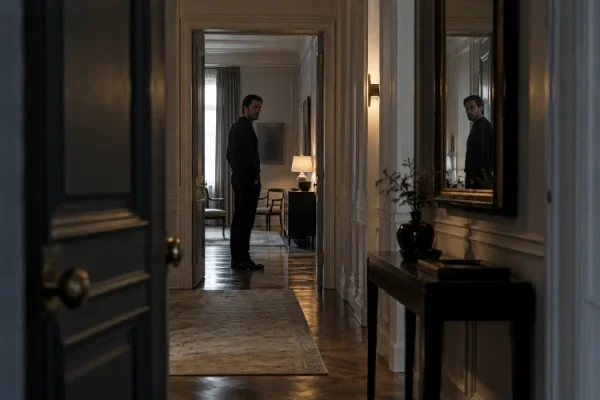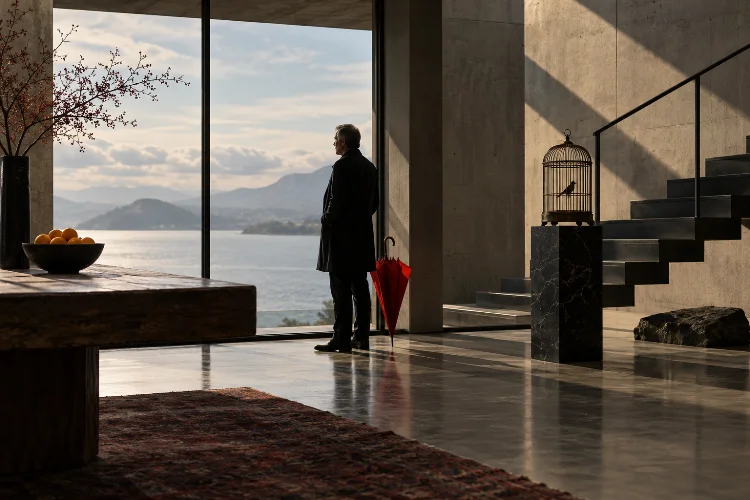
Have you ever watched a movie and noticed an unusual object appearing repeatedly, a particular color dominating certain scenes, or a seemingly ordinary location carrying an unexpected emotional weight? Chances are, those details weren’t accidental.
Some of cinema’s most fascinating stories communicate their deepest messages without directly explaining them.
That’s where symbolic imagery comes in.
In contemporary auteur cinema, filmmakers often use visual symbols to explore complicated subjects such as identity, memory, social inequality, grief, and human relationships.
A staircase might represent social mobility, an empty room could communicate emotional isolation, and an everyday object might become a powerful metaphor for existence.
Unlike conventional storytelling, where dialogue frequently explains a character’s feelings, auteur filmmakers allow visual details to suggest meanings that audiences must gradually interpret.
Decoding symbolic imagery across contemporary auteur cinema today helps us understand how directors transform ordinary cinematic elements into layers of emotional and philosophical expression.
From Bong Joon-ho’s architectural metaphors in Parasite to Robert Eggers’ mythological imagery in The Lighthouse, modern filmmakers continue finding inventive ways to communicate beyond words.
Let’s explore how these visual techniques work, why they matter, and what they reveal about contemporary cinematic storytelling.
What Is Symbolic Imagery in Auteur Cinema?
Symbolic imagery refers to visual elements that communicate meanings beyond their immediate, literal appearance.
These elements might include colors, objects, architectural features, landscapes, lighting, costumes, or recurring visual patterns.
For example, a broken mirror might literally be an object damaged during an argument. Symbolically, it could suggest fractured identity, emotional instability, or a relationship that can no longer be repaired.
The meaning depends on the story’s context.
Understanding the Auteur Approach
The term auteur comes from the French word for author.
In film criticism, auteur theory emphasizes the director’s creative influence and recognizable artistic perspective.
Directors associated with auteur cinema often develop distinctive approaches to storytelling, cinematography, editing, and thematic exploration.
Filmmakers such as Yorgos Lanthimos, Bong Joon-ho, Céline Sciamma, and Robert Eggers demonstrate how recognizable visual styles can communicate personal artistic concerns.
However, filmmaking remains collaborative. Cinematographers, production designers, editors, and other artists play essential roles in creating the imagery that audiences interpret.
Auteur cinema is therefore less about one person doing everything and more about a coherent artistic vision shaping the finished film.
Symbols Versus Visual Motifs
Although they’re closely related, symbols and motifs aren’t identical.
A symbol is an image or object that suggests additional meaning beyond its literal function.
A motif is a recurring visual element that helps establish patterns throughout a film.
For instance, repeated images of doors might create a motif associated with emotional boundaries.
One particular locked door could become a symbol of a character’s inability to confront the past.
Understanding this difference makes film analysis more precise.
Not every recurring object has one fixed meaning, and not every meaningful image needs to appear repeatedly.
Color Symbolism and the Emotional Language of Cinema
Color is one of the most immediately recognizable tools in cinematic storytelling.
Before audiences understand a character’s situation, they often respond emotionally to the visual atmosphere.
Filmmakers can use carefully selected palettes to establish tension, warmth, uncertainty, or psychological transformation.
How Color Communicates Without Dialogue
Certain colors carry familiar cultural associations.
Red might suggest passion, danger, anger, or urgency. Blue can communicate tranquility, emotional distance, or melancholy, while green may represent nature, growth, jealousy, or something unsettling.
However, these meanings aren’t universal.
A filmmaker can deliberately challenge familiar associations by establishing a different visual context.
What matters most is how a color functions within a particular story.
When the same color repeatedly appears during emotionally significant moments, audiences may begin connecting it with specific themes.
This process creates a visual language that works alongside dialogue and performance.
Poor Things and the Transformation of Perception
Yorgos Lanthimos’ Poor Things (2023) provides an excellent example of color supporting character development.
The film follows Bella Baxter as she explores an unfamiliar world and gradually develops independence.
Early sequences employ black-and-white cinematography, while later scenes introduce increasingly vibrant colors.
This transition can be interpreted as reflecting Bella’s expanding awareness and changing relationship with her surroundings.
The production design reinforces this development through fantastical architecture, unusual textures, and exaggerated environments.
In a British Film Institute interview, Lanthimos discusses how the film’s visual extravagance contributes to its distinctive cinematic world.
The transformation isn’t simply decorative.
It creates a visual experience connected to Bella’s curiosity, discovery, and growing autonomy.
Why Color Symbolism Requires Context
It’s tempting to assume that every appearance of red represents danger or every blue background suggests sadness.
But such interpretations can oversimplify sophisticated filmmaking.
Consider a red dress worn during an important scene.
Its meaning might depend on the character’s personality, relationships, cultural background, and previous appearances of the same color.
A useful interpretation should consider the entire film rather than isolating one attractive image.
The strongest symbolism emerges from relationships between images, characters, and narrative themes.
Architecture and Spatial Symbolism in Parasite
Architecture can communicate social relationships with remarkable efficiency.
Buildings establish boundaries, create physical hierarchies, and determine how characters move through fictional environments.
In auteur cinema, these spaces frequently become metaphors for power, opportunity, and emotional separation.
Bong Joon-ho’s Parasite (2019) demonstrates this approach particularly well.
Staircases as Symbols of Social Hierarchy
The film follows two families occupying radically different positions within South Korean society.
The wealthy Park family lives in a spacious modern home, while the financially struggling Kim family occupies a cramped semi-basement apartment.
These contrasting environments establish the film’s social concerns before the characters openly discuss inequality.
Staircases repeatedly connect different levels of physical and economic existence.
Moving upward suggests access to wealth and privilege, while descending often returns characters to hardship.
Bong explicitly discussed stairs as a metaphor for social hierarchy during the 2019 Cannes Film Festival.
According to Yonhap News Agency, he described how the Park residence’s vertical construction influenced the film’s storytelling.
Windows and Contrasting Perspectives
Windows provide another important visual contrast.
The Park family’s large glass windows overlook a carefully maintained garden.
Their view suggests privacy, spaciousness, and the ability to control their surroundings.
Meanwhile, the Kim family’s low apartment window provides a limited view of street-level activity.
The difference reflects more than architectural preferences.
It suggests the unequal opportunities available to each household.
Even the way characters observe the outside world becomes connected to their economic circumstances.
Rain as a Symbol of Inequality
Rain plays a particularly important role in the film.
For the wealthy family, heavy rainfall disrupts leisure plans but creates relatively limited consequences.
For the Kims, the same weather contributes to devastating flooding.
This contrast demonstrates how a shared natural event can affect people differently depending on their social position.
Rain isn’t inherently associated with poverty or injustice.
Its symbolic meaning emerges from the dramatically unequal experiences presented by the narrative.
Parasite shows how carefully constructed environments can transform social criticism into immediately understandable visual storytelling.
Everyday Objects as Symbols of Identity and Meaning
Some of cinema’s most memorable symbols are surprisingly ordinary.
A photograph, toy, piece of clothing, or household object can develop emotional importance through repetition and narrative context.
These details help audiences recognize connections between characters and abstract ideas.
Everything Everywhere All at Once and the Everything Bagel
Everything Everywhere All at Once (2022), directed by Daniel Kwan and Daniel Scheinert, uses absurd imagery to explore existential anxiety and family relationships.
One of its most recognizable symbols is the everything bagel.
Within the film, the bagel becomes an exaggerated representation of overwhelming possibility and existential emptiness.
Its circular form and dark center evoke the idea of everything collapsing into nothing.
The symbolism works partly because the object is ridiculous.
Instead of presenting despair through a traditionally frightening image, the filmmakers transform familiar food into an unsettling cosmic metaphor.
This combination of humor and philosophical anxiety reflects the movie’s distinctive creative approach.
Googly Eyes as an Opposing Symbol
The film also repeatedly features small plastic googly eyes.
Initially, they appear to reflect Waymond’s playful personality and Evelyn’s frustration with his seemingly impractical behavior.
As the story develops, their meaning becomes more significant.
The googly eyes can be interpreted as symbols of humor, kindness, and the willingness to find value in ordinary experiences.
Their appearance contrasts visually with the everything bagel.
Both involve circular shapes, but their emotional associations are dramatically different.
An analysis published by the Ernest Becker Foundation examines this contrast in connection with the film’s themes of existential anxiety and meaning.
The result is a symbolic relationship that remains accessible despite the film’s elaborate multiverse narrative.
Why Ordinary Objects Become Powerful
Familiar objects often work effectively because audiences already understand their practical functions.
A filmmaker can gradually introduce an additional emotional or philosophical meaning without requiring extensive explanation.
The object remains recognizable while acquiring new significance.
When viewers encounter it again, they remember earlier scenes and emotional associations.
This makes symbolic imagery particularly effective in stories involving memory, personal growth, or changing relationships.
Fire, Portraiture, and Desire in Céline Sciamma’s Cinema
Céline Sciamma’s Portrait of a Lady on Fire (2019) uses restrained imagery to explore intimacy, artistic creation, and the limitations imposed on women.
The film follows Marianne, a painter commissioned to create a portrait of Héloïse, a young woman facing an arranged marriage.
Their relationship develops through observation, conversation, and increasingly intimate encounters.
Rather than relying on elaborate visual effects, Sciamma uses recurring images to communicate emotional tension.
Fire as Passion and Transformation
Fire is one of the film’s central visual motifs.
Flames appear through candles, fireplaces, and a striking outdoor sequence involving Héloïse’s dress.
These images can suggest passion, desire, danger, and emotional transformation.
In an interview with the British Film Institute, Sciamma explained that fire represented several connected ideas, including the women’s inner feelings, anger, and destruction.
This demonstrates why symbols can carry multiple meanings simultaneously.
Fire isn’t limited to romantic passion.
It can also suggest the intensity of emotions that cannot be openly expressed.
Portraits as Symbols of Control and Memory
Painting becomes another important symbolic element.
Initially, Marianne’s portrait is connected to social expectations and a marriage that Héloïse does not freely choose.
The painting represents an attempt to define her identity for others.
As the relationship develops, portraiture acquires another meaning.
It becomes connected to mutual recognition, artistic intimacy, and the preservation of memory.
The difference between observing someone as an object and understanding them as an individual becomes essential.
Sciamma uses this transformation to explore the relationship between representation and personal freedom.
The Symbolism of Looking
The film repeatedly emphasizes glances and observation.
Characters look at each other, study expressions, and become increasingly aware of being watched.
These visual exchanges challenge the assumption that one person must always control the act of looking.
Instead, observation becomes reciprocal.
The imagery suggests that genuine intimacy requires both people to recognize each other’s individuality.
This subtle approach demonstrates how symbolic storytelling can emerge from ordinary physical behavior rather than elaborate visual metaphors.
Mythology and Surreal Imagery in The Lighthouse
Robert Eggers’ The Lighthouse (2019) represents a darker approach to cinematic symbolism.
The film follows two lighthouse keepers living in isolation on a remote island.
As their relationship deteriorates, the narrative introduces unsettling imagery involving the sea, animals, light, and mythological figures.
These elements contribute to an atmosphere where psychological experience and symbolic interpretation become increasingly difficult to separate.
Light as Knowledge and Forbidden Desire
The lighthouse itself occupies the center of the film’s visual world.
Literally, it provides illumination for maritime navigation.
Symbolically, its mysterious light can suggest knowledge, power, obsession, and forbidden experiences.
One character’s desire to access the light develops into a central source of conflict.
The imagery evokes mythological stories about humanity’s desire to obtain powers or knowledge beyond ordinary limitations.
However, the film doesn’t provide one definitive explanation.
Its uncertainty allows several interpretations to coexist.
Mythological References and Psychological Conflict
Eggers draws inspiration from mythology, maritime folklore, literature, and historical imagery.
The film includes visual references associated with Prometheus, Proteus, mermaids, and threatening seabirds.
These figures introduce themes of punishment, transformation, temptation, and humanity’s vulnerability to forces beyond its control.
The British Film Institute’s Sight and Sound explores these artistic influences, including references to symbolist paintings and older cinematic traditions.
The imagery can be understood as both mythological expression and psychological projection.
This creates a deliberately unstable relationship between external reality and internal experience.
Black-and-White Cinematography as Symbolic Expression
The film’s monochrome photography and narrow frame contribute to its oppressive atmosphere.
Strong contrasts between light and shadow create visually striking compositions.
Darkness often obscures information, while intense illumination becomes associated with fascination and danger.
The confined framing also reinforces feelings of isolation.
Although these choices don’t function as fixed symbols individually, they create a visual language that supports the movie’s central themes.
The Lighthouse demonstrates how an auteur can combine cinematography, mythology, and ambiguity to produce unusually dense symbolic storytelling.
Memory and Personal Objects in Aftersun
Not all symbolic imagery is dramatic or immediately recognizable.
Some contemporary filmmakers rely on subtle details whose emotional importance becomes clear only after the story develops.
Charlotte Wells’ Aftersun (2022) offers a particularly moving example.
The film explores memories of a childhood holiday shared by Sophie and her father, Calum.
Its emotional complexity emerges through ordinary moments that acquire additional meaning when viewed retrospectively.
The Camcorder as a Symbol of Memory
A camcorder appears throughout the film.
On the surface, it simply records holiday activities.
However, the footage also represents the limits of memory and the difficulty of fully understanding another person’s experiences.
Young Sophie records moments of happiness, conversation, and everyday interaction.
Years later, those images can be interpreted through a different emotional perspective.
The recordings preserve appearances but cannot reveal everything Calum was experiencing internally.
In a British Film Institute interview, Wells discussed how the camera introduces another point of view into the father-daughter relationship.
The device becomes an important connection between observation, memory, and emotional uncertainty.
Water and Emotional Distance
Water appears repeatedly through swimming pools and the surrounding coastal environment.
It creates a recognizable holiday atmosphere while also supporting moments of emotional introspection.
Depending on the scene, water can suggest freedom, vulnerability, distance, or uncertainty.
Its significance doesn’t depend on one fixed interpretation.
Instead, the visual context encourages viewers to connect its appearances with the characters’ emotional experiences.
Why Subtle Symbols Feel Personal
The power of Aftersun comes partly from its restraint.
Rather than announcing the meaning of every visual detail, Wells allows ordinary objects and environments to accumulate emotional significance.
This approach resembles the way personal memories often function.
A holiday photograph or short recording might seem unremarkable when created but become deeply meaningful years later.
The film suggests that symbolic imagery doesn’t always require fantastic situations or elaborate metaphors.
Sometimes, emotional depth emerges from everyday experiences that audiences recognize from their own lives.
Symbolic Absence and Moral Distance in The Zone of Interest
Jonathan Glazer’s The Zone of Interest (2023) demonstrates how visual symbolism can communicate disturbing moral questions through restraint.
The film depicts the domestic life of Auschwitz commandant Rudolf Höss and his family, who live directly beside the concentration and extermination camp.
Its visual approach emphasizes the contrast between ordinary household routines and the atrocities taking place nearby.
The Garden Wall as a Moral Boundary
One of the film’s most significant visual elements is the wall separating the family’s garden from Auschwitz.
Physically, it divides two spaces.
Symbolically, it can represent moral denial, deliberate separation, and the normalization of extreme violence.
The family maintains an apparently comfortable domestic existence while the sounds of human suffering remain audible beyond the boundary.
The wall doesn’t eliminate that reality.
Instead, it allows the characters to behave as though the horrors occurring nearby belong to another world.
Beautiful Imagery and Disturbing Context
The family’s carefully maintained garden provides another unsettling contrast.
Flowers, greenery, and domestic routines appear visually peaceful.
However, their proximity to atrocities changes how audiences experience that beauty.
The British Film Institute’s Sight and Sound discusses the film’s distant camera perspective and the persistent presence of the camp boundary.
These choices create tension between what is visible and what the audience knows.
The garden becomes disturbing not because flowers are inherently sinister, but because the surrounding context transforms their significance.
What Filmmakers Choose Not to Show
Absence can be as meaningful as visible symbolism.
Glazer largely avoids directly depicting the atrocities within the camp.
Instead, sound and visual context continually remind viewers of what remains outside the frame.
This approach creates a form of ethical confrontation.
The audience must consider the relationship between everyday normality and the suffering deliberately excluded from the characters’ attention.
The film demonstrates how visual storytelling can communicate powerful ideas through boundaries, omissions, and carefully controlled perspectives.
How to Decode Symbolic Imagery Without Overinterpreting Films
Analysing symbolism can make watching movies more rewarding.
However, it also introduces the risk of treating every object, color, or camera angle as a hidden message.
Not every visual decision contains a deliberate metaphor.
Effective film analysis requires curiosity, context, and reasonable supporting evidence.
Look for Repetition and Meaningful Changes
Recurring visual details often provide useful starting points.
If a particular object appears during several emotionally significant moments, consider whether its meaning changes as the story develops.
For example, the googly eyes in Everything Everywhere All at Once become increasingly connected to the film’s philosophical themes.
Their recurrance helps establish a recognizable symbolic pattern.
However, repetition alone doesn’t prove an intentional meaning.
The surrounding narrative must support the interpretation.
Connect Symbols to Character Development
A useful symbolic reading should explain something about the story.
Ask whether an image reflects a character’s emotional state, social position, personal conflict, or changing worldview.
In Poor Things, the shift toward more colorful environments becomes meaningful because it accompanies Bella’s growing experience of the world.
In Parasite, architectural differences communicate inequality because the narrative repeatedly contrasts the families’ circumstances.
These interpretations are persuasive because they connect visual details with broader themes.
Consider Cultural and Historical Context
Symbols don’t carry identical meanings across every culture.
An object associated with celebration in one tradition may have a completely different significance elsewhere.
Similarly, references to mythology, literature, or historical art can introduce meanings that aren’t immediately obvious.
Understanding the filmmaker’s cultural background and creative influences may help clarify these connections.
Interviews, production notes, and credible film criticism provide useful supporting information.
However, filmmakers’ explanations shouldn’t automatically be treated as the only possible interpretations.
Cinema remains an artistic medium in which audiences can develop meaningful readings grounded in the finished work.
Accept Ambiguity
Some filmmakers deliberately resist clear symbolic explanations.
An image might simultaneously suggest desire, fear, guilt, and transformation.
Attempting to reduce it to one definitive meaning can make the film less interesting.
Consider the lighthouse beam in Eggers’ film.
Its significance changes depending on whether viewers emphasize mythology, psychological conflict, or the relationship between the two characters.
Multiple interpretations can remain valid when supported by cinematic evidence.
The purpose of decoding symbolism isn’t to discover a secret answer hidden inside every scene.
It’s to understand how visual details contribute to the movie’s emotional and thematic complexity.
Why Symbolic Imagery Still Matters in Contemporary Auteur Cinema
Modern filmmakers have access to sophisticated digital effects, virtual production technology, and increasingly flexible cinematography tools.
These developments make visually ambitious storytelling more accessible.
Yet symbolic meaning doesn’t depend on expensive equipment.
A thoughtfully arranged room can communicate more than an elaborate computer-generated environment.
Creating Emotional Connections Without Explanation
Symbolic imagery allows filmmakers to express feelings that characters might struggle to articulate.
An empty chair can communicate absence, while a familiar object can evoke grief or nostalgia.
Such details invite audiences to participate in interpreting emotional meaning.
Instead of receiving direct explanations, viewers develop connections through observation.
This can make cinematic experiences feel more intimate and memorable.
Giving Films a Distinct Artistic Identity
Recurring visual elements can also establish a recognizable directorial style.
Bong Joon-ho’s architectural contrasts, Lanthimos’ unusual environments, and Eggers’ mythological imagery demonstrate different approaches to visual storytelling.
These techniques reflect distinct thematic interests and cinematic sensibilities.
However, memorable auteur cinema isn’t defined simply by having unusual-looking images.
Its strength comes from connecting visual creativity with narrative purpose.
Encouraging Deeper Film Appreciation
Learning to recognize symbolic imagery changes the viewing experience.
Audiences begin noticing relationships between color, framing, objects, and character development.
Scenes that previously seemed ordinary may reveal additional layers of meaning.
This doesn’t mean every movie requires complicated analysis.
Sometimes, a striking image simply creates an immediate emotional response.
But understanding the visual choices behind that response can deepen appreciation for the collaborative artistry of filmmaking.
Symbolic imagery plays a powerful role in contemporary auteur cinema, allowing filmmakers to communicate emotions, social criticism, and philosophical ideas beyond ordinary dialogue.
From the staircases of Parasite to the mysterious light in The Lighthouse, visual elements can transform familiar objects and environments into meaningful cinematic expressions.
Films such as Poor Things, Portrait of a Lady on Fire, Aftersun, and The Zone of Interest demonstrate how symbolism can emerge through color, architecture, memory, and even deliberate visual absence.
The most compelling symbols rarely have just one interpretation. Their meaning develops through context, repetition, and the audience’s emotional understanding.
Next time you watch an auteur film, pay closer attention to recurring objects, unusual compositions, and changing visual patterns.
You might discover that some of cinema’s deepest ideas are hiding in plain sight.