

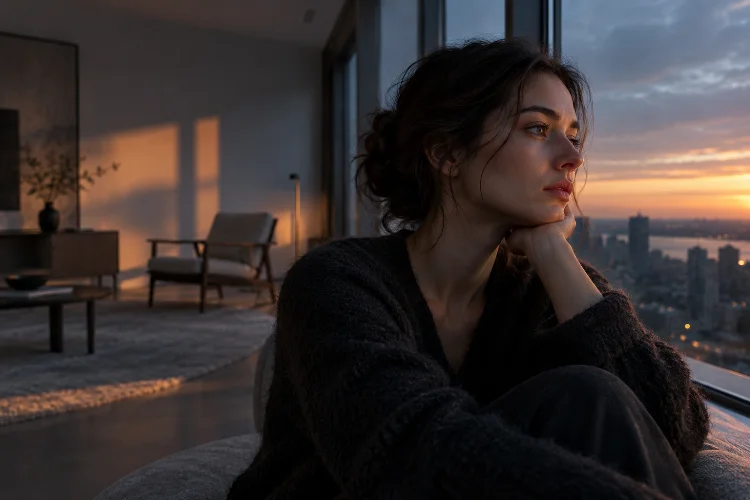
What makes a movie stay in your mind long after the credits roll? Sometimes, it’s not a dramatic speech, an unexpected plot twist, or even a memorable performance.
It’s a quiet close-up, an empty room, or a particular shade of blue that somehow captures an emotion words couldn’t explain.
That’s where visual storytelling comes into play.
Modern filmmakers have become incredibly skilled at communicating feelings through images rather than relying entirely on dialogue.
From carefully designed lighting to subtle camera movements, every visual decision can influence how audiences understand characters and connect with their experiences.
The emotional depth of modern cinema often comes from these seemingly small details. A character standing alone in a crowded city can reveal loneliness, while a lingering shot of an ordinary object might communicate grief, nostalgia, or hope.
Understanding how these techniques work can completely change the way we watch movies.
In this article, we’ll explore how visual storytelling creates emotional connections, examine memorable examples from contemporary films, and discover why cinematic imagery remains one of the most powerful tools for expressing human experiences.
What Is Visual Storytelling in Modern Cinema?
Visual storytelling is the art of communicating narrative information, character development, and emotions through images.
Instead of explaining everything through conversations, filmmakers use composition, color, movement, and visual symbolism to make audiences understand what’s happening beneath the surface.
Think about a character sitting alone at a dinner table. The screenplay could include a line explaining that they feel abandoned. However, a wide shot showing several empty chairs might communicate that feeling more naturally.
The audience doesn’t necessarily need an explanation. The visual arrangement already suggests something meaningful.
Showing Emotion Instead of Explaining It
One of cinema’s greatest strengths is its ability to show emotions without directly naming them.
In Moonlight (2016), directed by Barry Jenkins, the cinematography frequently places viewers close to the characters’ personal experiences. Intimate framing, expressive lighting, and carefully selected colors help communicate vulnerability, identity, and emotional tension.
Cinematographer James Laxton has discussed how color and camera placement contribute to the film’s emotional language. Even moments with minimal dialogue carry considerable psychological weight.
This approach allows viewers to interpret characters through their expressions, surroundings, and physical behavior.
Rather than being told exactly what someone feels, audiences participate in discovering those feelings.
Why Visual Communication Feels Personal
Images leave room for interpretation, which can make cinematic experiences surprisingly intimate.
Different viewers might understand the same scene in slightly different ways because they bring their own memories, experiences, and expectations into the theater.
A rainy street might remind one person of heartbreak and another of peaceful childhood memories.
Filmmakers can guide these associations, but they rarely control them completely.
That balance between artistic intention and personal interpretation is one reason visual storytelling creates such powerful emotional connections.
How Cinematography and Framing Influence Emotional Connections
Camera framing is much more than deciding what fits inside the screen. It influences how close viewers feel to characters, where their attention goes, and how they interpret relationships.
Even a small adjustment in camera position can completely change a scene’s emotional meaning.
Close-Ups Create Intimacy
A close-up brings viewers into a character’s personal space.
Subtle changes in facial expressions become easier to notice, including hesitation, discomfort, affection, and suppressed sadness.
Imagine someone receiving unexpected news. A wide shot might show their surroundings and physical reaction, while a close-up allows the audience to notice the slight movement of their eyes or the tension around their mouth.
Neither approach is automatically better. The emotional impact depends on what the filmmaker wants viewers to experience.
Close-ups become especially effective when actors communicate complex feelings without speaking.
Wide Shots Communicate Isolation
Wide compositions can achieve the opposite effect.
A character appearing unusually small against a large landscape may seem powerless, disconnected, or overwhelmed.
An empty street, enormous building, or distant horizon can communicate emotional seperation without requiring dramatic action.
However, wide shots aren’t always associated with sadness. They can also express freedom, possibility, wonder, or relief.
Context determines the meaning.
Framing Through Barriers
Doors, windows, mirrors, and corridors are particularly useful for representing emotional distance.
In Wong Kar-wai’s In the Mood for Love (2000), characters are frequently framed through narrow spaces and architectural boundaries. The compositions reinforce the tension between physical proximity and feelings that remain unspoken.
The movie’s visual restrictions reflect the characters’ complicated relationship.
The British Film Institute has examined how Wong’s visual approach transforms loneliness, longing, and romantic uncertainty into a deeply sensory experience.
This demonstrates an important principle: the way a character occupies the frame can reveal as much as their dialogue.
The Emotional Power of Color and Lighting in Film
Color and lighting are among the most recognizable elements of cinematic visual language.
They can establish the emotional atmoshpere of a scene before a character says anything.
However, their influence goes beyond making a movie look attractive.
Color Builds Emotional Associations
Filmmakers often use color palettes to support emotional themes.
Blue might suggest distance, contemplation, or melancholy. Warm orange lighting can communicate comfort, intimacy, or nostalgia, while harsh green tones may create discomfort or uncertainty.
These associations aren’t universal rules. Their meaning changes across cultures, genres, and narrative contexts.
For instance, a bright red room could symbolize romance in one movie and danger in another.
What matters is how consistently the filmmaker establishes a visual relationship between color and emotion.
In Moonlight, saturated colors and distinctive lighting choices contribute to the film’s rich emotional identity.
The result is a visual environment that feels connected to the characters’ inner lives.
Lighting Reveals Psychological States
Lighting doesn’t simply make actors visible.
Its direction, intensity, contrast, and softness can influence how viewers interpret their expressions.
Soft illumination may create tenderness, while sharp shadows can introduce tension or uncertainty.
Low-key lighting, which emphasizes darker areas and strong contrasts, is frequently associated with mystery and psychological conflict. Meanwhile, brighter and more evenly distributed light can make environments appear open or reassuring.
Yet thoughtful filmmakers sometimes reverse these expectations.
A brightly illuminated room might feel emotionally cold, particularly when its visual perfection contrasts with a character’s distress.
Color Changes Can Reflect Character Development
Visual palettes can also evolve throughout a story.
A film might begin with muted tones and gradually introduce warmer colors as its protagonist develops meaningful relationships.
Alternatively, a cheerful visual environment might become increasingly desaturated as a character loses hope.
Such changes work best when they feel motivated by the narrative.
Audiences may not consciously identify every shift, but the overall visual progression can deepen their emotional understanding.
The strongest cinematic color choices support the story rather than compete with it.
How Camera Movement Shapes the Audience’s Experience
Movement changes the relationship between the viewer and the fictional world.
A camera can observe characters from a distance, follow them through unfamiliar spaces, or move close enough to create a sense of participation.
Each choice produces a different emotional experience.
Handheld Cameras and Emotional Vulnerability
Handheld cinematography can create a feeling of immediacy.
Small movements and imperfect stability sometimes make a scene feel spontaneous, especially during arguments, confrontations, or moments of uncertainty.
When used effectively, this technique can make audiences feel as though they’re experiencing events alongside the characters.
However, excessive camera movement may also become distracting.
Emotional authenticity doesn’t require constant instability. Sometimes, a completely stationary camera is more revealing.
Slow Movement Builds Anticipation
A gradual push toward a character can make an ordinary moment feel increasingly significant.
Imagine someone standing silently in a hallway while the camera slowly approaches.
Nothing dramatic needs to happen. The movement itself encourages viewers to examine the character’s emotional state more closely.
This can create anticipation, intimacy, or discomfort, depending on the surrounding scene.
In contrast, a slow movement away from a character can suggest emotional withdrawal or abandonment.
Perspective Encourages Empathy
Camera perspective also determines whose experience receives attention.
In Aftersun (2022), director Charlotte Wells explores the relationship between a daughter and her father through images shaped by memory and limited understanding.
The film’s camcorder footage becomes an important visual perspective, reflecting how personal recordings can preserve moments without fully explaining their meaning.
Audiences gradually recognize emotional details that the younger character may not understand.
This creates a particularly moving experience because viewers are invited to interpret the past rather than simply observe it.
The film demonstrates how perspective can communicate the difference between what people remember and what they eventually come to understand.
Production Design and Visual Symbolism Create Deeper Meaning
Cinematography isn’t the only element responsible for visual expression.
Production design, including locations, architecture, furniture, costumes, and objects, can reveal important information about characters before they speak.
A carefully designed environment can become an extension of someone’s emotional world.
Spaces Can Reflect Social and Emotional Conflict
Bong Joon-ho’s Parasite (2019) offers an excellent example.
The film uses architectural contrasts to explore inequality, aspiration, and social division.
The wealthy Park family’s spacious home differs dramatically from the Kim family’s cramped semi-basement apartment.
These environments communicate more than economic differences.
They shape how characters move, interact, and perceive their opportunities.
Staircases and changing elevations repeatedly reinforce the story’s social hierarchy.
According to reporting in Architectural Digest, the film’s production design was carefully developed to support these narrative ideas.
Rather than depending entirely on conversations about class, the movie makes inequality visible through its environments.
Objects Become Emotional Symbols
Ordinary objects can acquire powerful emotional meaning when filmmakers establish their importance over time.
A photograph might represent a relationship that no longer exists. An unfinished meal could suggest an interrupted routine, while a damaged childhood toy may symbolize lost innocence.
The object itself doesn’t need to be extraordinary.
Its significance develops through the audience’s understanding of the characters.
Repeated visual details are particularly effective because their meaning can change as the story progresses.
Something comforting at the beginning might become heartbreaking by the ending.
Costume Design Communicates Identity
Clothing also contributes to visual characterization.
A character who consistently wears formal, carefully arranged outfits might communicate a desire for control or social acceptance.
A gradual change toward more relaxed clothing could suggest growing confidence or emotional freedom.
These interpretations depend on context rather than fixed psychological formulas.
When combined with performance and narrative development, costume choices help audiences recognize personal transformation without unnecessary exposition.
Editing and Visual Rhythm Influence Memory and Empathy
Individual images matter, but the relationship between images can be equally important.
Film editing determines when viewers receive information, how long they observe an expression, and how separate moments connect emotionally.
A scene’s meaning can change dramatically depending on what appears immediately before or after it.
The Kuleshov Effect Explains Emotional Interpretation
One influential concept in film theory is the Kuleshov effect.
It describes how audiences interpret a person’s expression differently depending on the images presented alongside it.
A neutral face followed by a meal might suggest hunger. The same face paired with a distressing image could appear worried or sympathetic.
Research published in Social Cognitive and Affective Neuroscience examined this phenomenon using behavioral measurements and functional brain imaging.
The study found that contextual visual sequences influenced how participants interpreted facial expressions and mental states.
The implication is fascinating: editing helps create emotion by establishing relationships between images.
It isn’t always the individual shot that determines meaning, but its position within the sequence.
Pacing Changes Emotional Intensity
Fast editing can communicate urgency, excitement, confusion, or psychological overload.
Longer shots give audiences more opportunities to observe details and consider emotional implications.
Neither style automatically creates deeper storytelling.
A rapid montage might express a character’s fragmented mental state, while an uninterrupted scene can reveal tension through awkward pauses and small physical movements.
The important question is whether the editing rhythm reflects the emotional experience being presented.
Visual Memory Makes Stories More Personal
Returning to Aftersun, the film uses recorded footage, fragmented images, and carefully structured transitions to explore memory.
Its emotional strength comes partly from what remains uncertain.
Viewers recognize that personal recordings preserve appearances, but they cannot always explain what someone was experiencing internally.
This distinction between remembered images and emotional truth is central to the film.
It also reflects everyday life.
Most people have looked at an old photograph and wondered whether they truly understood what was happening when it was taken.
Cinema can recreate that familar feeling through editing, repetition, and visual perspective.
Why Restraint and Unseen Details Matter in Modern Cinema
Modern filmmaking has access to increasingly sophisticated digital cameras, visual effects, animation, and post-production tools.
These technologies allow creators to build remarkable environments and achieve images that would have been extremely difficult in earlier eras.
Yet emotional complexity doesn’t necessarily increase with technical spectacle.
Sometimes, the strongest storytelling decisions involve showing less.
The Emotional Impact of What Remains Unseen
The Zone of Interest (2023), directed by Jonathan Glazer, demonstrates how restrained imagery can communicate disturbing ideas.
The film presents the domestic routines of a Nazi commandant’s family living beside Auschwitz.
Rather than directly depicting much of the violence taking place beyond their home, the film emphasizes ordinary activities and the disturbing contrast between visible domestic life and atrocities occurring nearby.
Cinematographer Łukasz Żal employed a deliberately observational approach, using multiple remotely operated cameras and naturalistic visual arrangements.
The American Society of Cinematographers has documented this unusual production method and its commitment to restrained, realistic imagery.
The result challenges viewers to consider the moral significance of what characters choose to ignore.
Here, emotional depth emerges not from visual extravagance but from the relationship between what audiences see and what they understand is happening outside the frame.
Negative Space Encourages Reflection
Negative space refers to relatively empty areas surrounding subjects within a composition.
Filmmakers can use it to emphasize isolation, emotional distance, or uncertainty.
For example, a character positioned near the edge of a largely empty frame might appear disconnected from their environment.
A stationary shot held after someone leaves a room can make their absence feel surprisingly powerful.
The empty space gives viewers time to recognize what has changed.
This kind of restraint encourages audiences to engage with the story rather than simply recieve information.
Technology Should Serve Emotional Meaning
Modern visual effects can expand storytelling possibilities, particularly in fantasy, science fiction, and animation.
Digital environments, virtual production, and advanced color grading allow filmmakers to build distinctive visual worlds.
However, impressive imagery doesn’t automatically produce emotional engagement.
A visually spectacular sequence becomes more meaningful when audiences understand how it affects a character’s relationships, fears, or desires.
The most effective filmmakers combine technical creativity with emotional clarity.
Their goal isn’t simply to show something audiences have never seen before, but to help viewers feel something meaningful through that imagery.
Visual storytelling remains one of the most important reasons cinema can communicate emotions so effectively.
Through thoughtful cinematography, color, lighting, production design, editing, and visual symbolism, filmmakers transform ordinary images into meaningful experiences.
Movies such as Moonlight, Parasite, Aftersun, and The Zone of Interest demonstrate that emotional depth doesn’t always require elaborate dialogue or dramatic explanations.
Sometimes, a carefully composed shot communicates more than an entire conversation.
As filmmaking technology continues to evolve, the essential principle remains unchanged: powerful visuals should support human experiences rather than overshadow them.
The next time you watch a movie, pay attention to how characters are framed, how environments change, and what the camera chooses not to reveal.
You might discover that some of cinema’s most compelling stories are told without words.